La giornata a Jiufen + Shifen, dall'inizio alla fine
Due Taiwan molto diversi, a un'ora di distanza
Jiufen e Shifen non sono lo stesso tipo di luogo, ed è proprio per questo che di solito vengono abbinate. Jiufen è una città mineraria d'oro aggrappata a un versante montuoso sopra la costa, nata sui giacimenti auriferi dell'epoca Qing e raggiunse il suo apice sotto il dominio coloniale giapponese; quando le miniere chiusero nel 1971 si svuotò quasi completamente, per essere riscoperta solo dopo che il film del 1989 di Hou Hsiao-hsien A City of Sadness — girato proprio lì — vinse il Leone d'Oro a Venezia e riportò i turisti taiwanesi su per la collina. Shifen è un'altra storia: una fila di case e case da tè stipate su una stretta cengia lungo la ferrovia secondaria di Pingxi, dove, secondo la versione di New Taipei City, i coloni del Fujian dei primi dell'Ottocento, tormentati dai banditi, usavano le lanterne celesti per segnalare che erano al sicuro.
Cosa copre effettivamente una singola giornata
Porta a porta dal centro di Taipei, il tour guidato è indicato come della durata di circa sette ore, e la pagina di prenotazione lo definisce una stima che il traffico e il meteo possono modificare. È tempo sufficiente per percorrere entrambe le vecchie strade, liberare una lanterna e vedere la cascata, senza che la gita si trasformi in una giornata sui mezzi. Da soli, Shifen si raggiunge sulla linea secondaria di Pingxi e Jiufen in autobus, perché non ha una stazione propria.
Perché l'ordine del percorso è importante
Il tour che presentiamo di seguito visita prima Shifen, alla luce del giorno, e riserva Jiufen per ultima. C'è una ragione pratica: la cascata e il lancio delle lanterne rendono meglio nelle foto e si vivono con più intensità alla luce del giorno o nell'ora dorata, mentre tutto il fascino di Jiufen sta nel bagliore delle lanterne contro il buio, quindi arrivare al calare del crepuscolo è il momento in cui la città appare come nelle fotografie. Facendo il contrario — Jiufen di giorno, Shifen di notte — ci si ritrova a combattere con la folla nella luce piatta del pomeriggio nel primo luogo e in piedi al buio in una stazione ferroviaria attiva per l'altro.
La giornata in sintesi
- Durata tipicaCirca 7 ore porta a porta, incluso il tempo di viaggio dal centro di Taipei
- Partenza abitualeGli orari di partenza variano in base alla data e all'opzione scelta e sono indicati nel calendario di prenotazione; Shifen è la prima tappa, mentre Jiufen si visita mentre il cielo si fa scuro
- Cosa è inclusoUna guida autorizzata, trasporto e assicurazione, con tempo dedicato alla cascata, a Shifen Old Street e a Jiufen. Cibo, bevande e la tua lanterna non sono inclusi
- Quando si svolgeConsulta il calendario delle prenotazioni per la tua data; sono disponibili opzioni condivise e private, e la pagina di prenotazione segnala che il traffico o le condizioni meteorologiche possono influire sugli orari
Dopo il tramonto tra le montagne
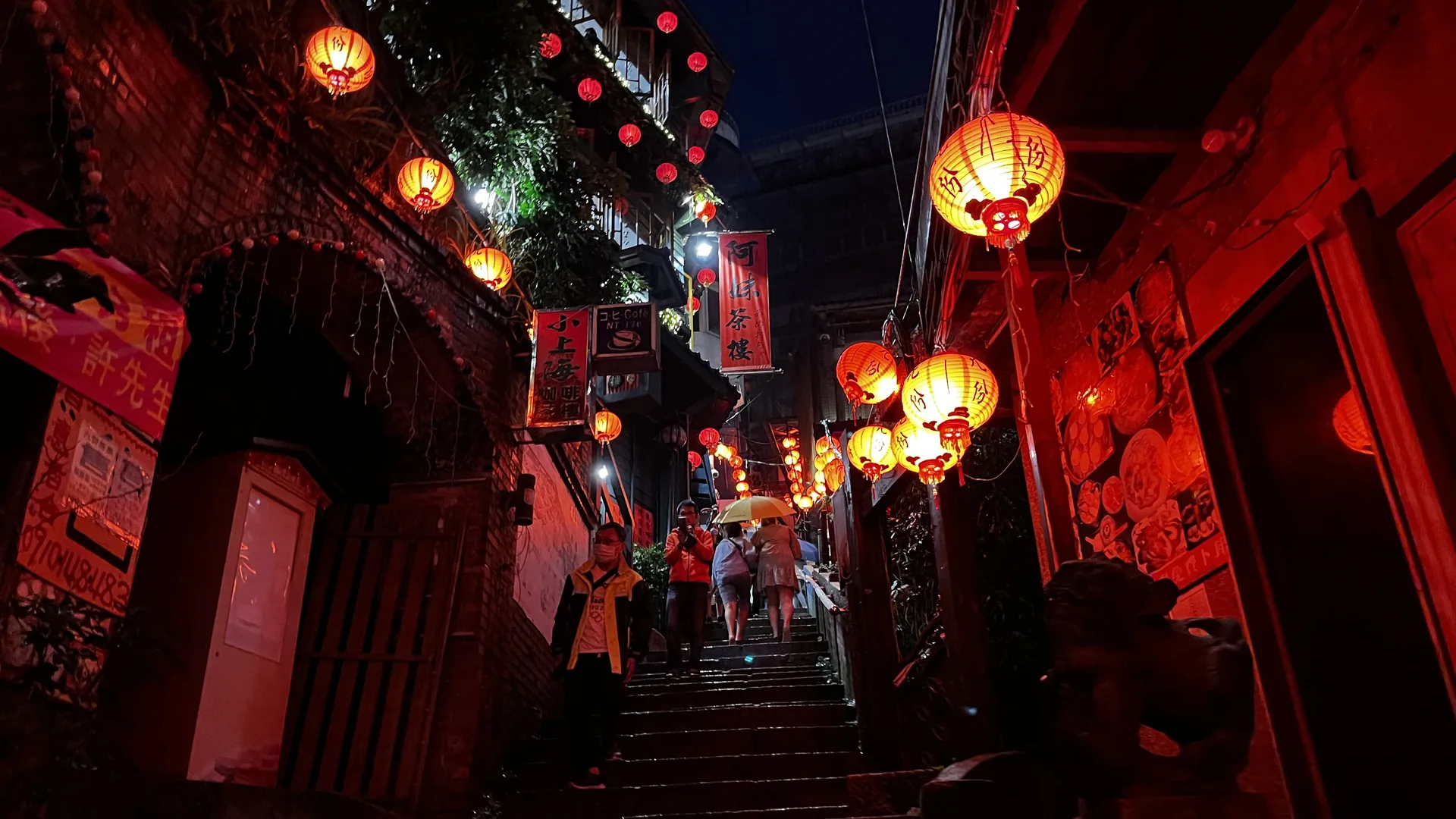
Jiufen Old Street dopo il tramonto
La scalinata che tutti fotografano
La Via Shuqi — la ripida e stretta scalinata in pietra fiancheggiata da lanterne rosse e case da tè arroccate l'una sull'altra — è l'immagine che la maggior parte delle persone ha di Jiufen prima ancora di esserci stata, e dal vivo è più stretta e più ripida di quanto appaia nelle foto. È un vicolo a gradoni di case da tè e vetrine, con lanterne rosse appese lungo tutto il percorso. Mettete in conto la fila per i punti fotografici migliori proprio sulla scalinata il sabato sera: è una strada a senso unico incastonata in una collina, e tutti i visitatori vogliono lo stesso scatto.
La domanda su La città incantata
Salta fuori quasi a ogni visita: la città vecchia di Jiufen, su più livelli e illuminata dalle lanterne, assomiglia davvero al mondo delle terme de La città incantata di Hayao Miyazaki? Visivamente sì, tanto da far sì che il paragone segua la città ovunque — ma Hayao Miyazaki ha negato che Jiufen sia stato il modello del film. Ciò che Jiufen e il film condividono è un autentico tipo storico: la densa architettura verticale delle città minerarie taiwanesi, il genere di luogo che sembra in parte immaginato anche quando non lo è. Andateci per l'atmosfera, per quello che è: la somiglianza è un bonus, non il motivo della visita.
Le case da tè, e cosa aspettarsi davvero
Le case da tè di Jiufen sono una sosta da vivere con calma, seduti, più che una rapida pausa caffè. L'Amministrazione del Turismo le annovera, insieme alla vista sul mare al largo di Keelung, tra i motivi per visitare il luogo, e un servizio dedicato a Taiwan attribuisce a una casa da tè, ospitata in una residenza secolare in Jishan Street, il merito di aver dato il via alla seconda età dell'oro della cittadina. Un tavolo vicino alla finestra non è mai garantito, quindi considerate la casa da tè come un piacevole extra più che come un programma.
Giù nella valle di Pingxi
Shifen: lanterne volanti e la cascata
Scrivere un desiderio, e poi lasciarlo andare
Nelle bancarelle lungo la Shifen Old Street si acquista una lanterna di carta, si scrivono i propri desideri con un pennello e la si lascia andare con le proprie mani. Il sito turistico di New Taipei City descrive le lanterne come fatte di carta di riso, scritte con un pennello cinese, con banconote di carta moneta poste all'interno come combustibile che le solleva in volo. Si innalzano sopra la ferrovia che attraversa il centro della strada, quindi tenetevi lontani dai binari quando è in arrivo un treno e attraversate solo dove i cartelli lo consentono.
Da dove viene davvero la tradizione
Dietro la lanterna del cielo si nasconde una storia più antica e pratica. Secondo il sito turistico di New Taipei City, nei primi anni del XIX secolo gli immigrati del Fujian che bonificavano Pingxi erano spesso molestati dai banditi, e le lanterne del cielo venivano usate per segnalare che erano al sicuro. Esistono altre storie sulle origini, tra cui il racconto dei Tre Regni di Zhuge Kongming, motivo per cui sono anche chiamate lanterne Kongming. Pingxi ha fatto rivivere la sua cultura delle lanterne negli anni '90, e la città ospita il Pingxi Sky Lantern Festival dal 1999, nel giorno della Festa delle Lanterne e nel fine settimana precedente.
La cascata stessa
La Cascata di Shifen è larga circa 40 metri e alta 20, una vasta cortina d'acqua più che una stretta cascata verticale, e la più ampia di Taiwan. Il sito turistico di New Taipei City la definisce le Cascate del Niagara di Taiwan, perché le sue rocce digradano controcorrente: un paragone che riguarda la forma, non le dimensioni. Nelle giornate di sole la nebbia d'acqua forma spesso arcobaleni, da cui il soprannome della vasca sottostante, Piscina dell'Arcobaleno. Si trova all'interno di un parco comunale con diverse piattaforme panoramiche, una tappa facile da abbinare al lancio delle lanterne.
Altri modi per vedere Jiufen e Shifen
Trova un tour di un giorno a Jiufen e Shifen per le tue date
Ogni opzione qui sotto è prenotabile tramite GetYourGuide, con disponibilità in tempo reale e il prezzo finale mostrato nella tua valuta prima di pagare.
Come arrivare
Come organizzarsi: tour guidato o treno-e-autobus
Entrambi i siti sono raggiungibili senza un tour — la domanda è se il tempo e la fatica risparmiati valgono l'orario fisso. Ecco la versione onesta di ciascuna opzione.
Il più semplice, orario fisso
Un tour guidato di un giorno
Una guida con licenza ti accoglie al punto di ritrovo (la pagina di prenotazione indica MRT Taipei Main Station, uscita M3, per l'opzione standard), ti accompagna a Shifen e Jiufen con il trasporto previsto dall'itinerario e costruisce la giornata in modo che Jiufen arrivi quando il cielo si fa scuro. Trasporto e assicurazione sono inclusi; cibo, bevande e la tua lanterna non lo sono. Rinunci a scegliere il tuo ritmo e l'ordine delle tappe in cambio del non doverti preoccupare dei collegamenti ferroviari o di trovare la strada del ritorno dopo il tramonto.
Più economico, più flessibile, più organizzazione richiesta
Treno e autobus, in autonomia
Da Taipei, prendi un treno della Taiwan Railway fino a Ruifang, poi scegli tra un treno della linea secondaria di Pingxi fino a Shifen oppure un autobus per Jiufen, che non ha una stazione propria (le più vicine sono Houtong, Ruifang e Badouzi). Spostarsi tra Jiufen e Shifen significa tornare indietro passando per Ruifang. La linea di Pingxi è una secondaria a binario unico, quindi l'orario scandisce la tua giornata. Ti permette di concederti del tempo, ma solo se sai leggere senza problemi un orario della Taiwan Railway e non ti dispiace affrontare coincidenze che potrebbero non combaciare.
Scegliere il momento giusto
Il momento migliore della giornata e dell'anno per andarci
A che ora del giorno, e perché non è solo una questione di folla
Arrivate a Shifen quando c'è ancora buona luce per il lancio delle lanterne e per la cascata, poi programmate Jiufen per la finestra proprio al crepuscolo — non quando è già buio pesto, quando le lanterne sono accese ma c'è ancora abbastanza luce ambientale per vedere la disposizione delle scalinate e il mare oltre di esse. Si tratta di una finestra temporale ristretta, ed è per questo che questo tour è pensato per raggiungere Jiufen mentre il cielo si fa scuro.
Giorno feriale contro fine settimana
Shuqi Road di sabato sera è davvero affollata — una fila lenta e strascicata più che una passeggiata — mentre una visita in un giorno feriale, anche allo stesso orario del crepuscolo, è un'esperienza notevolmente diversa, con spazio per fermarsi davvero e guardare. La vecchia strada di Shifen è ancora più stretta e condivide la sua larghezza con una ferrovia in funzione, quindi anche lì le visite infrasettimanali restano la scelta più comoda, se l'orario lo permette.
Stagione e meteo
Il Pingxi Sky Lantern Festival si tiene il giorno del Festival delle Lanterne, con un secondo lancio nel fine settimana precedente, quindi le sue date seguono il calendario lunare; consultate il sito turistico di New Taipei City per l'anno. I giorni del festival sono molto più affollati di una visita ordinaria. A Pingxi piove anche spesso, quindi portate con voi l'attrezzatura antipioggia, e aspettatevi che i gradini in pietra di Jiufen siano umidi sotto i piedi. La nebbia si addice all'atmosfera di Jiufen più di quanto non le nuoccia.
GEO/FAQ
Domande su Jiufen e Shifen
Posso visitare Jiufen e Shifen in un giorno senza un tour?
Sì. Prendi un treno della Taiwan Railway da Taipei a Ruifang, poi o un treno della linea secondaria di Pingxi fino a Shifen oppure un autobus per Jiufen, che non ha una stazione propria. Non esiste una linea ferroviaria diretta tra Jiufen e Shifen, quindi dovrai passare di nuovo da Ruifang. Tutto dipende dagli orari dei treni, che non sempre coincidono alla perfezione: ed è qui che un tour guidato fa la differenza.
Perché i tour visitano Shifen prima di Jiufen e non il contrario?
Ogni luogo si rivela al meglio con una luce diversa. La cascata e il lancio delle lanterne celesti sono più suggestivi e fotogenici di giorno o durante l’ora d’oro, mentre le scalinate illuminate di lanterne di Jiufen sono il vero motivo per visitarla dopo il tramonto. Fare prima Shifen e poi Jiufen significa arrivare a Jiufen proprio al calare della sera, quando il borgo somiglia esattamente alle sue foto.
Jiufen è davvero l’ispirazione per *La città incantata*?
Non secondo Hayao Miyazaki, che ha negato che Jiufen sia stato il modello per il film. Ciò che i due condividono è un vero tipo architettonico: densi edifici verticali di una città mineraria taiwanese, ammassati su un pendio, un'atmosfera genuinamente così simile che il paragone segue la città ovunque. Vale la pena visitarla per ciò che è realmente, con la somiglianza come bonus anziché come attrazione principale.
Cosa comporta, concretamente, lanciare una lanterna celeste a Shifen?
Acquisti una lanterna di carta da uno dei banchetti di Shifen Old Street e ci scrivi sopra i tuoi desideri con un pennello. Il sito turistico di New Taipei City spiega che all'interno viene collocata della cartamoneta, il combustibile che la fa sollevare in volo. La lanterna si alza sopra la ferrovia che attraversa il centro della strada, quindi tieniti lontano dai binari quando è in arrivo un treno e attraversa solo dove i cartelli lo consentono.
Da dove nasce, in realtà, la tradizione delle lanterne celesti?
Dietro c'è una storia pratica, anche se le versioni differiscono. Il sito turistico di New Taipei City racconta che nei primi anni del XIX secolo gli immigrati del Fujian che bonificavano Pingxi erano spesso molestati dai banditi, e le lanterne celesti venivano usate per segnalare che erano al sicuro. La leggenda più nota cita Zhuge Kongming. Pingxi ha fatto rivivere la sua cultura delle lanterne negli anni '90, e la città organizza un Festival delle Lanterne Celesti dal 1999.
Quanto è grande, in realtà, la cascata di Shifen?
Larga circa 40 metri e alta 20 — una cascata ampia a forma di sipario, non certo stretta, e la più larga di Taiwan. Il sito turistico di New Taipei City la definisce le Cascate del Niagara di Taiwan per come la roccia si inclina contro il flusso dell'acqua. Un paragone che riguarda la forma, non le dimensioni: è solo una frazione della scala del Niagara. Si trova all'interno di un parco comunale con diverse piattaforme panoramiche.
Jiufen è affollata, e ha importanza che giorno scelgo?
Sì, notevolmente — Shuqi Road il sabato sera è una lenta coda strisciante, non una passeggiata. Una visita in un giorno feriale alla stessa ora del crepuscolo è un’esperienza genuinamente diversa, più tranquilla, con spazio per guardarsi davvero intorno. Anche la via principale di Shifen, ancora più stretta e condivisa con una ferrovia in funzione, beneficia di una visita infrasettimanale, se il tuo programma lo permette.
Qual è il periodo migliore dell’anno, e c’è un festival specifico?
Il Pingxi Sky Lantern Festival si tiene il giorno del Festival delle Lanterne, con un secondo lancio nel fine settimana precedente, quindi le sue date seguono il calendario lunare. È la versione più imponente del rituale, ma i giorni del festival sono molto più affollati di una visita ordinaria. Consultate il sito turistico di New Taipei City per le date dell'anno. A Pingxi piove spesso, quindi portate con voi l'attrezzatura antipioggia ogni volta che andate.
Quanto dura l'intera escursione di un giorno?
Il tour guidato è indicato come di circa sette ore e la pagina di prenotazione lo definisce una stima che il traffico e il meteo possono modificare. È tempo sufficiente per percorrere entrambe le vie storiche, liberare una lanterna e vedere la cascata senza che la giornata diventi soprattutto spostamenti. Il calendario di prenotazione mostra l'orario di partenza.
Il prezzo visualizzato è già quello finale? E come funziona la prenotazione?
Prenoti tramite GetYourGuide, che mostra il prezzo finale nella tua valuta prima del pagamento e indica in anticipo la politica di cancellazione per la data specifica — il prezzo che vedi è quello che paghi, senza costi nascosti al momento del checkout. Siamo una guida indipendente per escursioni giornaliere, non il tour operator né la compagnia ferroviaria; la prenotazione è gestita dal sistema di pagamento sicuro di GetYourGuide.