九份+十分の一日を、最初から最後まで。
わずか1時間で味わう、まったく異なるふたつの台湾。
九份と十分は同じ種類の場所ではありません。だからこそ、たいていセットで訪れられるのです。九份は海岸を見下ろす山腹に張りつくように広がるかつての金鉱の町で、清朝時代の金鉱脈の上に築かれ、日本統治時代に最盛期を迎えました。1971年に鉱山が閉山するとほぼ完全に人が去りましたが、侯孝賢監督が1989年にここで撮影した『悲情城市』がヴェネツィアで金獅子賞を受賞したことで再発見され、台湾の観光客が再びこの坂道を上るようになりました。十分はまた別の物語です。平渓線沿いの狭い棚地に家々と茶館がひしめく一帯で、新北市の説明によれば、19世紀初頭に匪賊に悩まされていた福建省からの入植者たちが、無事を知らせるために天燈を上げたのが始まりとされています。
たった1日で、これだけの体験が詰まっています。
台北中心部からdoor to doorで、ガイド付きツアーは約7時間と記載されており、予約ページでは、交通状況や天候により変動する目安とされています。それだけの時間があれば、2つの老街を散策し、ランタンを飛ばし、滝を見ても、移動だけで終わる一日にはなりません。個人で行く場合、十分は平渓支線沿いにあり、九份は専用の駅がないためバスで向かうことになります。
ランニングオーダーが重要な理由
以下でご紹介するツアーは、まず日中のうちに十分(シーフェン)を訪れ、九份(ジウフェン)は最後に取っておきます。これには実用的な理由があります。滝もランタン飛ばしも、日中の光やゴールデンアワーのほうが写真映えし、体感としてもずっと良い一方、九份の魅力は何といっても暗闇に浮かぶランタンの灯りにあります。だからこそ、夕暮れに差しかかる頃に到着すると、この町は写真で見たそのままの姿を見せるのです。逆の順番——九份を日中に、十分を夜に——にしてしまうと、一方では平坦な午後の光の中で人混みにもまれ、もう一方では現役の鉄道駅で暗闇の中に立たされることになります。
一日の概要
- 標準的な所要時間台北中心部からの移動時間を含め、玄関から玄関まで約7時間
- 通常の出発時間開始時刻は日付とオプションによって異なり、予約カレンダーに表示されます。まず十分を訪れ、九份は空が暗くなるにつれてご覧いただけます。
- 含まれるもの公認ガイド、交通機関、保険付きで、滝、十分老街、九份での自由時間をお楽しみいただけます。食事、飲み物、ランタンは含まれておりません。
- 運行時ご希望の日付については予約カレンダーをご確認ください。共同催行とプライベートのオプションをご用意しており、予約ページには交通状況や天候により時間が前後する場合がある旨が記載されています。
山々に夜が訪れた後
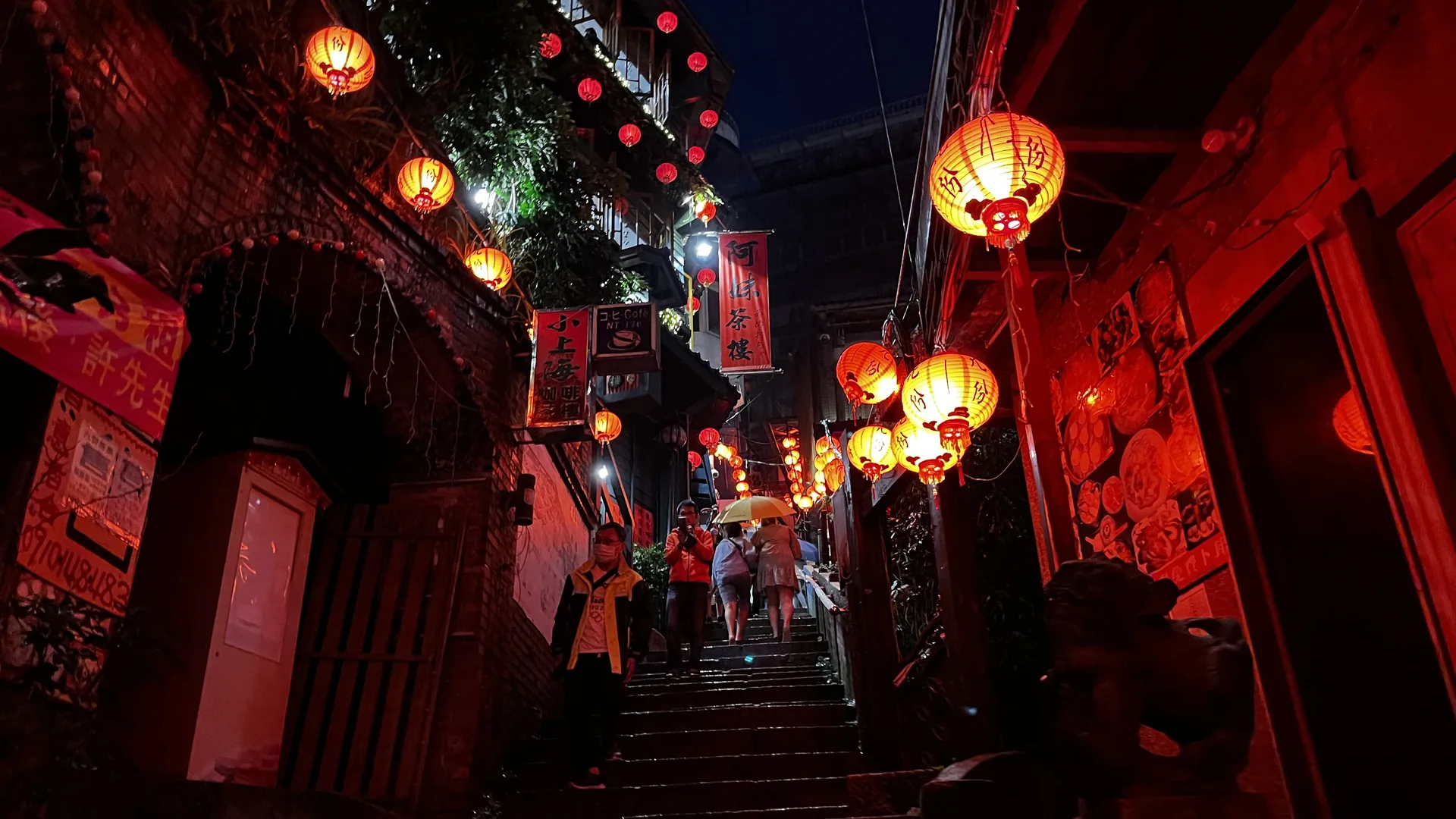
日が暮れてからの九份老街
誰もが写真を撮る階段
九份といえば、多くの人がまだ訪れたこともないのに思い浮かべるのが、赤い提灯が連なり、茶館が重なるように建つ、急勾配で狭い石段の路地、豎崎路。実際に目の前にすると、写真で見るよりずっと狭く、ずっと急です。茶館や店先が並ぶ階段状の小路で、沿道には赤い提灯が下がっています。土曜の夜ともなれば、石段そのものの絶景撮影スポットは行列必至。山腹に刻まれた一列の細い道に、訪れる誰もが同じ一枚を求めてやって来るのです。
「千と千尋の神隠し」との関係
九份のランタンに照らされた多層的な旧市街は、宮崎駿の『千と千尋の神隠し』に出てくる湯屋の世界に似ているのか——訪れるたびに、ほぼ必ず話題に上る問いです。視覚的には、はい、誰もが納得するほど似ており、その比較はこの町のどこにでもついて回ります。しかし宮崎駿本人は、九份が映画のモデルだったことを否定しています。九份と映画に共通するのは、実在した歴史的な建築様式です。密集した垂直方向の台湾の鉱山町の建築——それは、たとえ実際に存在していても、どこか想像上のもののように見える場所なのです。どうか九份そのものの雰囲気を味わいに行ってください。似ていることはおまけであり、訪れる理由ではありません。
茶芸館で実際に体験できること
九份の茶館は、さっとコーヒーを飲む場所ではなく、腰を落ち着けてゆっくり過ごすための立ち寄り先です。観光局は、基隆沖の海を望む景色とともに、これらの茶館を訪れる理由の一つとして挙げており、台湾の特集記事では、豎崎路の築100年の旧邸宅にある一軒の茶館が、この町の第二の黄金時代を呼び起こしたと紹介されています。窓際の席は決して保証されているわけではないので、茶館は計画というよりも、心地よいおまけとして捉えておきましょう。
平溪の谷間に広がる風景
十分:天灯上げと滝
願いを書いて、空へ放つ
十分老街の露店では、紙製のランタンを買い、筆で願い事を書き、手で空に放ちます。新北市の観光サイトによると、ランタンは米紙でできており、毛筆で文字を書き、中に紙銭を入れて燃料とし、それがランタンを浮かび上がらせます。ランタンは通りの真ん中を走る線路の上へと昇っていくため、列車が来る時は線路から離れ、表示のある場所だけを渡ってください。
この伝統が本当はどこから来ているのか
その天燈には、もっと古く、実用的な物語が隠されています。新北市の観光サイトによれば、19世紀初頭、平溪を開拓していた福建省からの移民はしばしば匪賊に襲われ、天燈は無事を知らせる合図として使われていました。他にも諸説あり、三国時代の諸葛孔明にちなむ話から「孔明灯」とも呼ばれます。平溪は1990年代に天燈文化を復活させ、1999年から元宵節当日とその前の週末に平溪天燈節を開催しています。
十分瀑布そのもの
十分瀑布は幅約40メートル、高さ約20メートル。細く落ちる滝ではなく、幅広い水のカーテンのような姿で、台湾で最も幅の広い滝です。新北市の観光サイトは、岩の傾斜が流れに逆らう形からこれを「台湾のナイアガラの滝」と呼んでいますが、これは規模ではなく形についての比喩です。晴れた日には水しぶきが虹を生むことから、滝壺は「彩虹淵」とも呼ばれます。いくつもの展望台を備えた市立公園内にあり、天燈上げと合わせて気軽に立ち寄れます。
九份&十分をもっと楽しむ方法
ご希望の日程に合った九份&十分日帰りツアーを探す
以下のすべてのオプションはGetYourGuideで予約可能。リアルタイムの空き状況と、お支払い前に表示されるご希望の通貨での最終価格をご確認いただけます。
アクセス方法
行き方を選ぶ:ガイド付きツアー vs 電車とバス
どちらの街もツアーなしで行くことはできます。問題は、節約できる時間と手間が、決まった日程に縛られることに見合うかどうかです。それぞれの実情を率直にお伝えします。
最もシンプルだが、日程は固定
ガイド付き日帰りツアー
公認ガイドが集合地点でお迎えします(標準プランの集合場所は予約ページに台北駅M3出口と記載)。行程の交通手段で十分と九份へご案内し、空が暗くなる頃に九份へ到着するよう一日を組み立てます。交通費と保険は含まれ、食事・飲み物・天燈は含まれません。自分のペースや順番を選ぶ自由を手放す代わりに、列車の乗り継ぎを調べたり、日暮れ後に自力で帰路を見つけたりする手間から解放されます。
安くて自由度は高いが、その分下調べが必要
電車とバスでの個人旅行
台北から台湾鉄道で瑞芳へ向かい、そこから平溪支線で十分へ、またはバスで九份へ向かいます。九份には駅がなく、最寄りは猴硐・瑞芳・八斗子です。九份と十分の間を移動するには瑞芳を経由して戻る必要があります。平溪線は単線の支線なので、時刻表が一日の流れを左右します。ゆっくり滞在できますが、台湾鉄道の時刻表を読み慣れていて、うまく接続しない乗り継ぎも気にしない方に向いています。
ベストなタイミング
訪れるのにベストな時間帯・季節
何時に行くべきか、それは混雑対策だけではない理由
十分には天燈上げと滝を楽しめる明るさが残るうちに到着し、九份はちょうど夕暮れの時間帯に合わせます。完全に暗くなってしまう前、天燈に灯がともりつつも、階段の配置やその先の海を見渡せる周囲の明るさが残る時間です。その時間帯はごく短く、だからこそこのツアーは空が暗くなり始める頃に九份へ着くよう組まれています。
平日と週末の違い
土曜の夜の豎崎路は本当に混み合っていて、散策というよりのろのろと進む行列のような状態になります。一方、同じ夕暮れの時間帯でも平日に訪れると、立ち止まってじっくり眺める余裕があり、明らかに違う体験になります。十分の老街はさらに幅が狭く、しかも現役の線路と道幅を共有しているため、予定が合うなら平日に訪れるほうが動きやすいのはこちらも同じです。
季節と天候
平溪天燈節は元宵節当日に開催され、その前の週末にもう一度天燈が上げられるため、日程は旧暦に従います。その年の日程は新北市の観光サイトでご確認ください。祭典当日は通常の訪問よりはるかに混雑します。平溪は雨の日も多いので雨具をお持ちください。九份の石段は足元が湿っていることを想定してください。霧は九份の雰囲気を損なうどころか、むしろ引き立てます。
GEO/FAQ
九份&十分に関する質問
ツアーなしで九份と十分を1日で訪れることはできますか?
はい。台北から台湾鉄道で瑞芳へ向かい、そこから平溪支線で十分へ、またはバスで九份へ向かいます。九份には駅がありません。九份と十分の間に鉄道路線はないため、瑞芳を経由して戻ることになります。列車の時刻表次第で、必ずしも都合よく接続するとは限りません。そこがガイド付きツアーの助けになるところです。
なぜツアーは九份ではなく、先に十分を訪れるのですか?
それぞれの場所に、最適な光の時間帯があります。滝や天灯の放流は、日中やゴールデンアワーの方が見た目も写真映えも格段に良く、一方、九份のランタンに照らされた階段は、夜になってこそ訪れる価値が生まれます。十分を先に、九份を最後にすることで、ちょうど夕暮れ時に九份に到着し、町が写真のように輝く瞬間を体験できます。
九份は、実際に『千と千尋の神隠し』のモデルなのでしょうか?
宮崎駿氏は、九份が映画のモデルだったことを否定しています。両者に共通するのは、実際に存在する建築様式です。丘の斜面に積み重なるように建つ、台湾の鉱山町の密集した垂直的な建物群は、雰囲気が確かに近く、そのためこの比較が町につきまとっています。実際の姿そのものを目的に訪れる価値があり、似ていることは主目的ではなくおまけです。
十分で天灯を放流するとは、具体的にどのような体験ですか?
十分老街の店で紙製の天燈を買い、筆で願い事を書きます。新北市の観光サイトによれば、天燈を浮かび上がらせる燃料として紙銭が中に置かれます。天燈は通りの中央を走る線路の上へ上がるため、列車が来る時間には線路から離れ、表示のある場所だけを横断してください。
天灯の伝統は、実際にはどこから来たのでしょうか?
諸説あるものの、その背景には実用的な物語があります。新北市の観光サイトによれば、19世紀初頭、平溪を開拓していた福建省からの移民はしばしば匪賊に襲われ、天燈は無事を知らせる合図として使われていました。最もよく知られる伝説は諸葛孔明にちなむものです。平溪は1990年代に天燈文化を復活させ、1999年から天燈節を開催しています。
十分滝は、実際どれほどの大きさなのでしょうか?
幅約40メートル、高さ約20メートル。細く落ちるのではなく、幅広いカーテン状の滝で、台湾で最も幅の広い滝です。新北市の観光サイトは、岩の傾斜が流れに逆らう形からこれを「台湾のナイアガラの滝」と呼んでいます。これは大きさではなく形についての比喩で、ナイアガラの規模には遠く及びません。いくつもの展望台を備えた市立公園内にあります。
九份は混雑しますか?また、訪れる曜日によって違いはありますか?
はい、顕著に混雑します。土曜の夕方の基山街は、散歩というよりは、ゆっくりと進む行列です。同じ夕暮れ時でも、平日に訪れれば、まったく異なる穏やかな体験ができ、周囲を見渡す余裕も生まれます。十分の老街はさらに狭く、現役の線路と共有しているため、スケジュールが許せば平日の訪問がおすすめです。
最もおすすめの季節はいつですか?また、特定の祭りはありますか?
平溪天燈節は元宵節当日に開催され、その前の週末にもう一度天燈が上げられるため、日程は旧暦に従います。この儀式の最大規模の催しですが、祭典当日は通常の訪問よりはるかに混雑します。その年の日程は新北市の観光サイトでご確認ください。平溪は雨の日も多いので、いつ訪れる場合も雨具をお持ちください。
整趟一日遊需要多長時間?
ガイドツアーの所要時間は約7時間と記載されており、予約ページでは交通状況や天候により変動する目安とされています。それでも、古い街並みを2つ歩き、ランタンを飛ばし、滝を見学するのに十分な時間があり、一日の大半を移動に費やすことはありません。開始時間は予約カレンダーでご確認いただけます。
表示されている料金が最終価格ですか?予約はどのように進みますか?
予約はGetYourGuideを通じて行います。支払い前に自国通貨での最終価格が表示され、予約する日付に適用されるキャンセルポリシーも事前に明示されるため、表示された金額がそのまま支払い額となり、決済時に隠れた追加料金が発生することはありません。当サイトはツアー運営会社でも鉄道会社でもなく、独立した日帰り旅行の案内サイトです。予約手続き自体はGetYourGuideの安全な決済システムで処理されます。