Lanterns, gold-town history and what to bring
Jiufen and Shifen: what to expect
How the Shifen lantern release works, where the tradition comes from, Jiufen's gold-mining past, the Spirited Away question and what to bring.
See Jiufen & Shifen day tours on GetYourGuide ↗Quick answer
Expect two different places. Shifen is a railway village where you write a wish on a rice-paper lantern and release it beside the tracks, with a waterfall nearby. Jiufen is a former gold-mining town of stepped lanes and teahouses, known to visitors for its red lanterns after dark. Wear shoes for stone steps, bring rain gear and cash, and keep clear of the tracks. Hayao Miyazaki has denied that Jiufen was the model for Spirited Away.
Two places, two kinds of day
Shifen and Jiufen are close on the map and different in nature. Shifen is a village strung along a railway, where trains pass the shop fronts and the draw is the lantern release and a broad waterfall. Jiufen is a hillside town of stepped lanes, teahouses and red lanterns, and its mining past is the reason it exists. The guided tour visits Shifen first and Jiufen last, so you see the outdoor sights while there is light and the lantern-hung lanes as the sky gets dark. For the buying side, see the tour-or-train guide.
Read next: Jiufen and Shifen day trip from Taipei
How the lantern release works
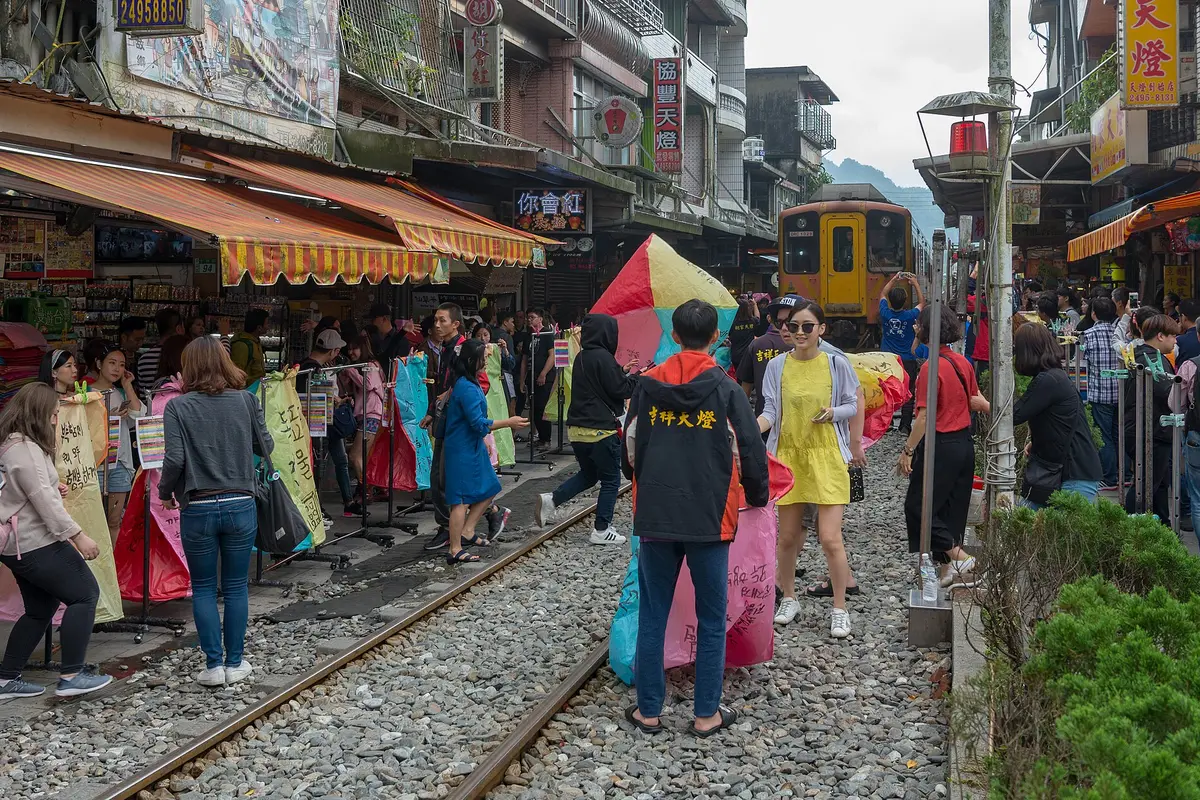
New Taipei City's tourism site describes the lanterns as rice paper. You write your wishes on them with a Chinese writing brush, and paper money is placed inside as the fuel that lifts them. Shops along Shifen Old Street sell them and give advice, and in the tourism site's words the train passes your front door. Under current laws, the same site says, Pingxi is the only place in Taiwan where sky lanterns can be released outdoors. Lantern expenses are not part of the tour price, so you pay at the stall.
Where the tradition comes from
The best-known origin story names Zhuge Kongming, the prime minister of Shu-Han in the Three Kingdoms period, who is said to have sent paper lanterns up with military messages. That is why they are also called Kongming lanterns. Pingxi has a local story as well. New Taipei City's tourism site says that in the early 19th century Fujian immigrants reclaiming Pingxi were often harassed by bandits, and lanterns were used to signal that they were safe. Pingxi revived its lantern culture in the 1990s, and the city has held a Sky Lantern Festival since 1999.
Staying safe beside a working railway
The Pingxi line is a working railway, built to haul coal and made a tourist line in 1992 according to the Tourism Administration. At Shifen the old street was built to meet it, so trains pass close to the shops and stalls. New Taipei City's pages tell visitors to follow the signs and not to cross the tracks at random, because it is dangerous. Wikipedia's Shifen station article says lanterns are lit on the railway near the station between trains. If a train is due, step to the side and wait. Your guide will explain the rhythm on the day.
Shifen Waterfall
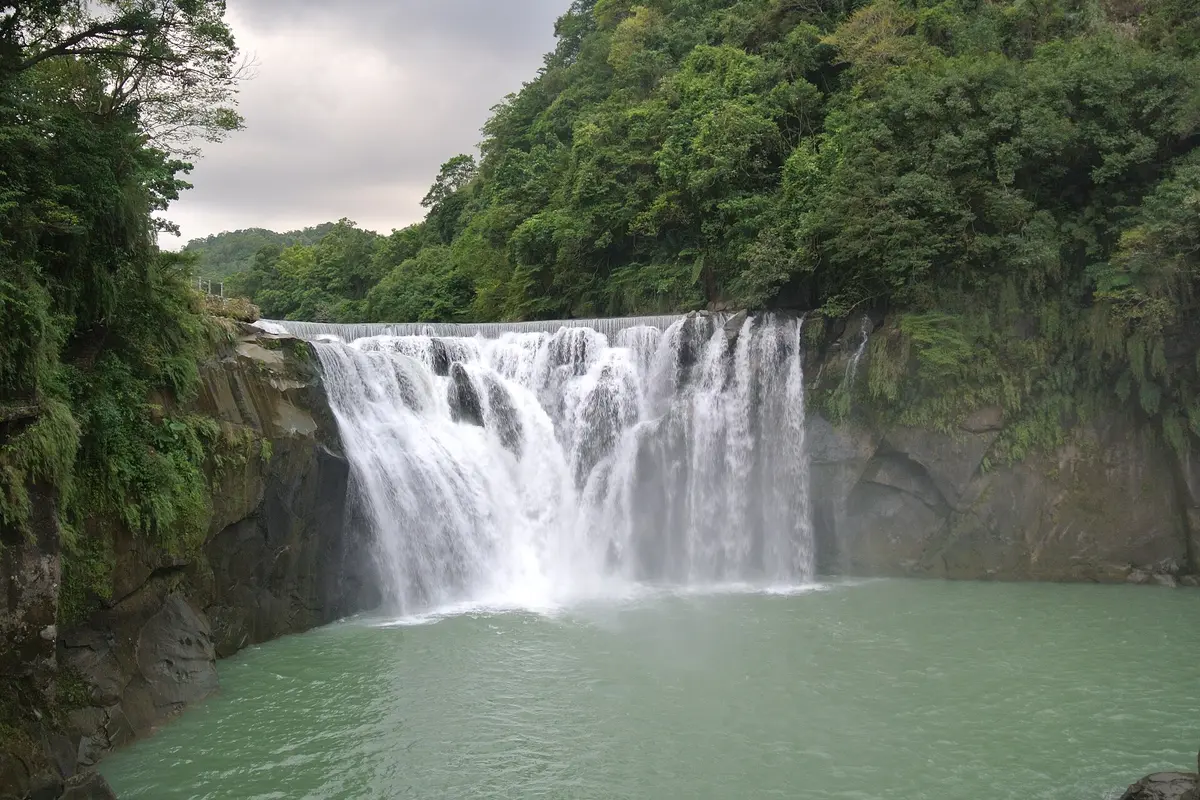
Shifen Waterfall is about 40 metres wide and 20 metres high, and Wikipedia calls it the broadest waterfall in Taiwan. New Taipei City's tourism site calls it Taiwan's Niagara Falls because its rock slopes against the flow, a comparison about shape rather than size. Mist often forms rainbows on sunny days, which gives the pool the nickname Rainbow Pool. It sits in a municipal park with several viewing platforms. The park opens every day except Lunar New Year's Eve, and its hours change with the season, closing earlier in winter than in summer.
Jiufen and the gold rush
Before gold, Jiufen's economy rested on camphor, according to the Tourism Administration. Wikipedia says workers building the Taipei to Keelung railway found gold flakes in the late 19th century, and a rush followed. The town grew into a boomtown that peaked under Japanese rule, and prospectors came from thousands of families. The name is usually translated as nine portions, a reference to nine families in the early village. Mining declined after the Second World War and the mine closed by the early 1970s, after which the town was largely forgotten for a time. Jiufen has about 1,600 residents today.
How Jiufen came back
Jiufen's revival began with a film. Hou Hsiao-hsien's 1989 film A City of Sadness, shot on location in the town, won the Golden Lion at the Venice Film Festival. Wikipedia says Jiufen and nearby Jinguashi became popular tourist destinations in the 1990s largely because of how it portrayed them. Teahouses, cafes and souvenir shops followed. A Taiwan feature credits one teahouse, in a century-old former mining-company residence on Jishan Street, with sparking the town's second golden age. If the mining story interests you, a Gold Museum operates in nearby Jinguashi.
Jiufen after dark
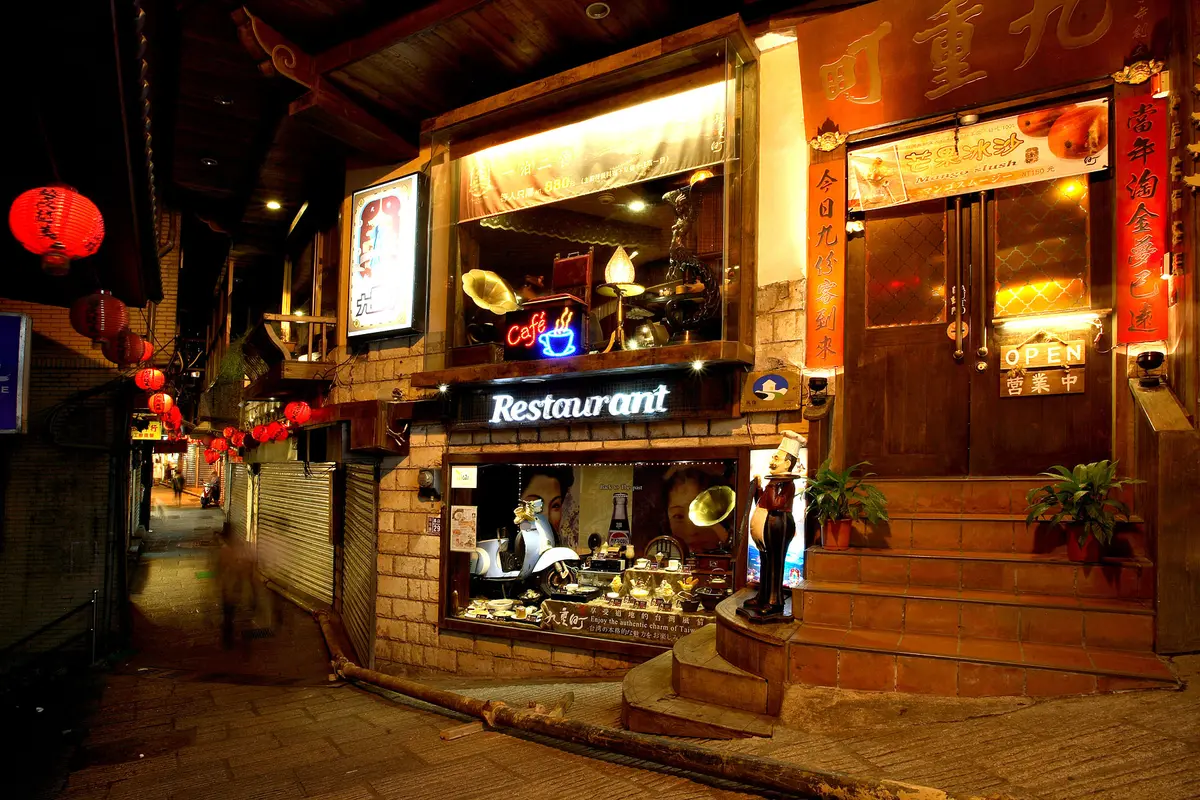
Jiufen grew organically on the slopes, so its streets twist and turn rather than follow a grid. Jiufen Old Street is the main shopping lane and runs through most of the village, with stepped streets lined with red lanterns and crowds of visitors. The Tourism Administration lists the teahouses and the view of the sea off Keelung among the reasons to come. A Taiwan feature notes that many shops now close early, so do not plan on late shopping. A window table in a teahouse is never guaranteed.
The Spirited Away question
Many visitors ask whether Jiufen is the town from Spirited Away. Wikipedia says the town gained popularity from 2001 for resembling the downtown area in the film, which drew Japanese tourists, and that Hayao Miyazaki has denied that Jiufen was the model. The same encyclopedia's article on the film names other inspirations for its bathhouse and buildings, including Dōgo Onsen, the Edo-Tokyo Open Air Architectural Museum and Notoya Ryokan. So treat the link as a popular association, not a fact. The lanterns and stepped lanes are worth seeing for themselves.
What to bring and wear
The booking page lists comfortable shoes, rain gear and cash, and says the tour includes a lot of walking. Jiufen's lanes are stepped, and the town sits on a slope, so shoes with grip matter more than style. New Taipei City's tourism site notes that Pingxi has many rainy days, and a Taiwan feature says the scenery in Jiufen changes with the seasons and even within a day, with fog in summer and sea-of-clouds mornings in spring. Take a layer and a way to keep your phone dry. Food and drinks are not part of the tour, so carry some cash for the stalls.
Who this isn't for
If you want Jiufen to yourself, this is not the day: the town is busy with visitors, and the lantern stalls at Shifen share a narrow street with a railway. If you hope to walk onto a Spirited Away set, you will not find one, since the link is only a popular association. The Pingxi Sky Lantern Festival is a separate event, with its own dates around Lantern Festival day, and an ordinary lantern release at a Shifen stall is not that festival. And the booking page does not recommend the tour for people with mobility impairments, heart problems or high blood pressure.
Frequently asked questions
What happens when you release a sky lantern in Shifen?
You write wishes on a rice-paper lantern with a brush, and the lantern is lifted by paper money placed inside. Shifen's shops sell the lanterns and give advice. Lantern expenses are not included in the tour, so you pay at the stall.
Is Jiufen the town from Spirited Away?
Not according to Hayao Miyazaki, who has denied that Jiufen was the model. The town did gain popularity from 2001 for resembling the film's setting. Treat the link as a popular association rather than a fact.
Is it safe to stand on the tracks at Shifen?
Follow the signs. New Taipei City's pages tell visitors to cross the railway only where marked, because crossing elsewhere is dangerous. Trains pass close to the shop fronts, so step to the side when one is due.
How big is Shifen Waterfall?
About 40 metres wide and 20 metres high, according to Wikipedia, which calls it the broadest waterfall in Taiwan. It is called Taiwan's Niagara Falls for its shape, not its size. The park's hours change with the season.
What was Jiufen's gold rush?
A late 19th-century boom that began when gold was found in the hills above the village. The town peaked under Japanese rule, then declined after the Second World War, and the mine closed by the early 1970s.
What should I bring to Jiufen and Shifen?
Comfortable shoes, rain gear and cash, which the booking page lists. Bring a layer for changeable weather and a way to keep your phone dry. Food, drinks and lantern costs are not included.
Sources